.png)

Blogs

Herniated Disc
July 21, 2021
Herniated Disc
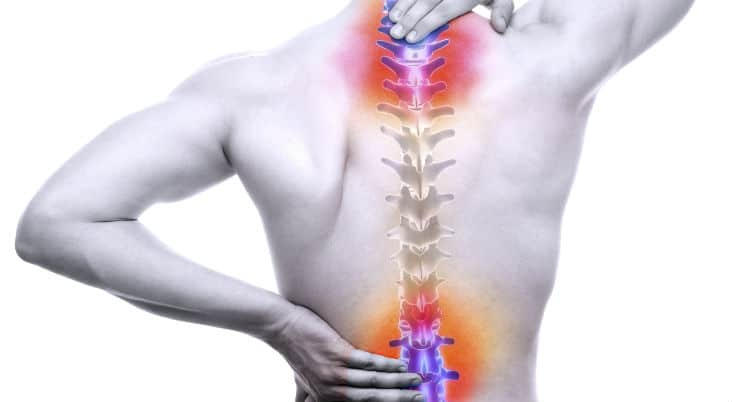
The spine consists of vertebrae stacked on top of each other from the top to the bottom of the back.
These vertebrae are cushioned by soft tissue called cartilage, which protects the vertebrae from shocks caused by everyday activities such as walking, bumps, and heavy lifting. It also helps maintain the spine's flexibility. The cartilage consists of a soft inner core and a tough outer ring.
When an injury or weakness occurs, the inner part of the cartilage protrudes through the outer ring, and is called a "herniated disc."
Symptoms of a Herniated Disc:
A herniated disc can occur in any part of the back, most often in the lumbar spine (lower back) or neck.
When a herniated disc compresses a spinal nerve, it causes severe pain along the affected nerve, with several common symptoms, including:
- Tingling or aching in the affected area of the back.
- Pain and numbness, usually on one side of the body and sometimes extending to the arms or legs.
- The pain worsens at night or with certain movements, such as walking, standing, and sitting.
- Pain when walking short distances.
- Loss of muscle control.
How is a herniated disc diagnosed?
The doctor will first perform a physical examination of the site of the pain, testing your pain sensation when touching or moving the affected area to determine nerve function. They may also require other tests to better visualize the bones, muscles, and soft tissues. These tests include:
- X-rays.
- CT scan.
- MRI.
Herniated Disc Surgery:
Surgery for a herniated disc aims to relieve pressure on the nerve, thereby relieving pain and other associated symptoms.
This is done using one of the following surgical techniques:
Open discectomy: Through traditional surgery and a large incision in the spine, the doctor removes the herniated disc.
Endoscopic spine surgery: Through a small incision in the spine, a thin tube (endoscope) is inserted to remove the herniated disc.
This procedure is the most common today, allowing the patient to recover in a shorter time.
Surgery on the nucleus of the spinal disc: The inner core of the disc is removed to make the disc smaller, reducing pressure on the nerve. An instrument is inserted into the disc, reaching the inner core. The core is then removed, either by suction or using a laser. This procedure sometimes causes side effects, such as damage to surrounding tissue. Therefore, it is only used if the outer portion of the disc remains intact.
Recovery time after herniated disc surgery:
The sooner the herniated disc surgery is performed, the faster the recovery time will be, according to the North American Spine Society.
Doctors also advise people recovering from herniated disc surgery to avoid the following activities for approximately four weeks:
- Sitting or standing for long periods.
- Driving a car.
- Lifting heavy weights.
- Bending your back.